Implementation speed
AI-assisted back-office implementation, reported by FaRbrix.

HEALTHCARE · AI-ASSISTED DEVELOPMENT / Intermedica Clinic
An electronic patient record, clinic workflows and a complete website rebuild, with AI used to accelerate development.
Project results
A collaboration of approximately four years, beginning around 2022.
AI-assisted back-office implementation, reported by FaRbrix.
Increase reported by FaRbrix alongside more efficient patient-journey management.
Average of five internal survey categories, January–September 2026.
Survey results and methodology ↗The survey score describes Intermedica’s service experience among respondents. It is separate from the development and capacity results, and does not establish an effect caused by AI.
A closer look
Clinicus / Back office
Four recreated views of the Clinicus workspace: patient records, referrals, treatment workflows and correspondence.
To protect patient privacy and medical confidentiality, we do not display real patient records or identifiable clinical information in this case study. These interfaces have been recreated with entirely fictional data to illustrate the workflows. Interface labels are shown in Dutch.
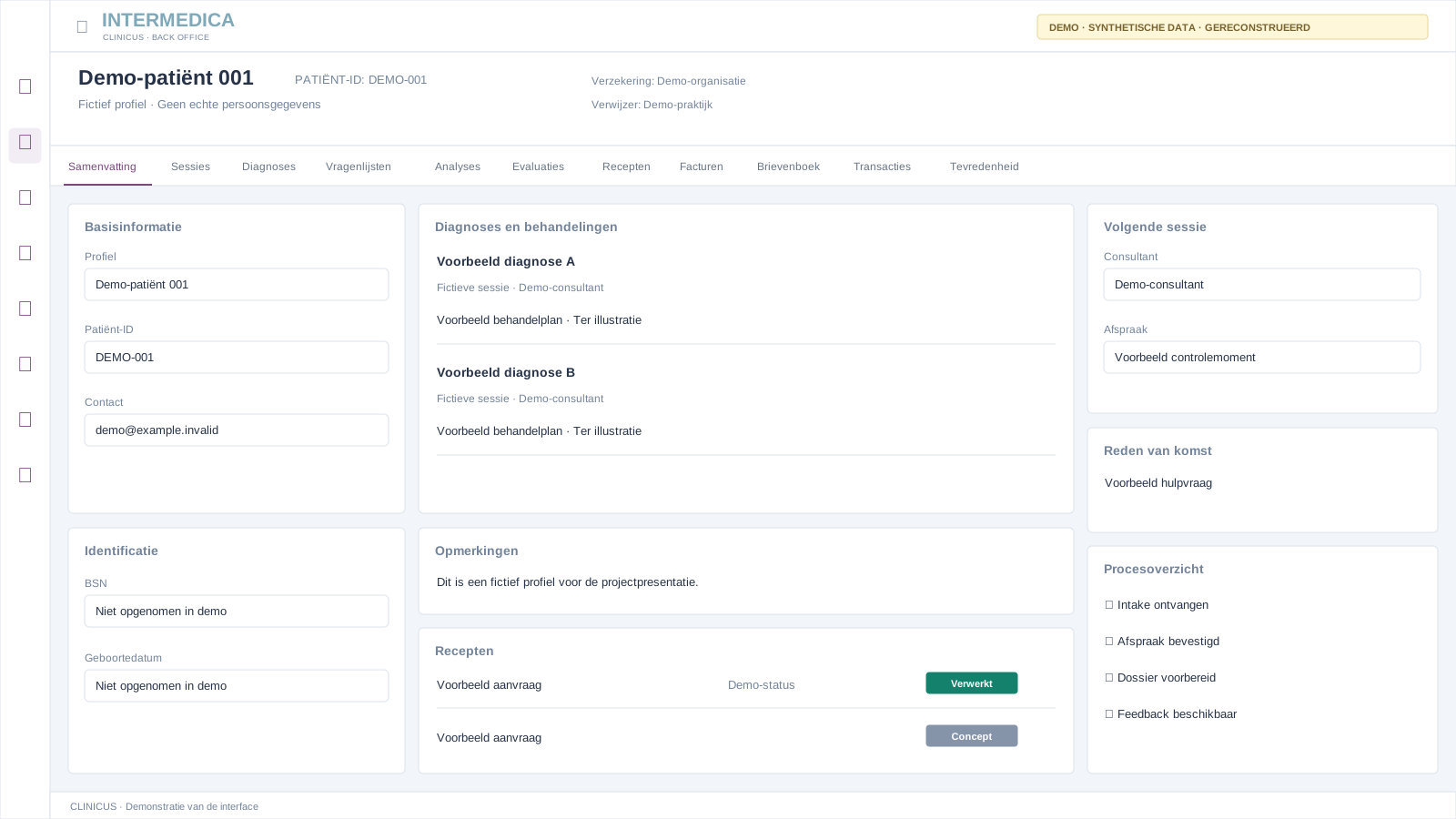
A structured view of patient information, consultations and follow-up.
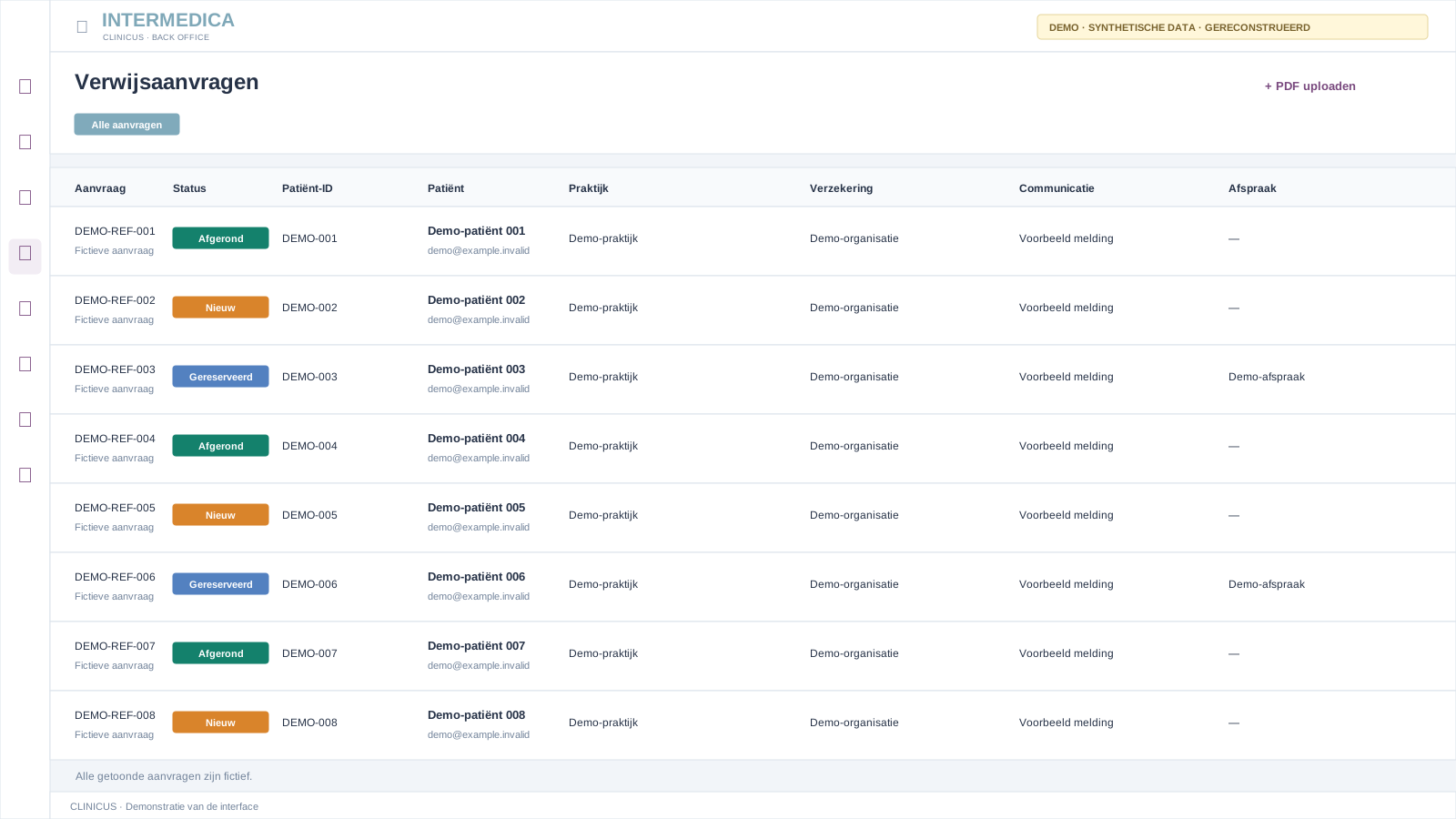
An overview of incoming referrals and their workflow status.
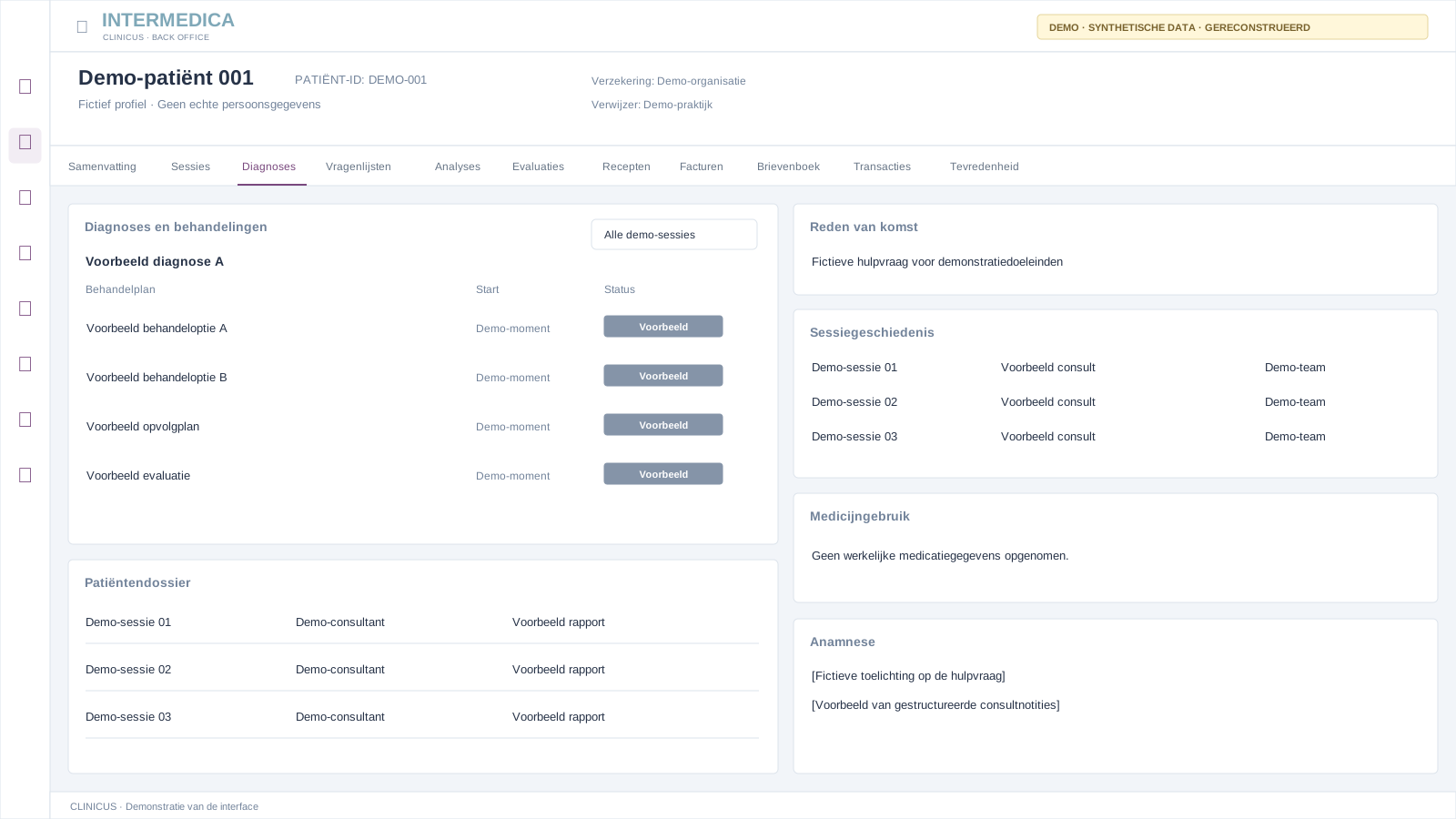
Consultation history, treatment workflows and structured notes.
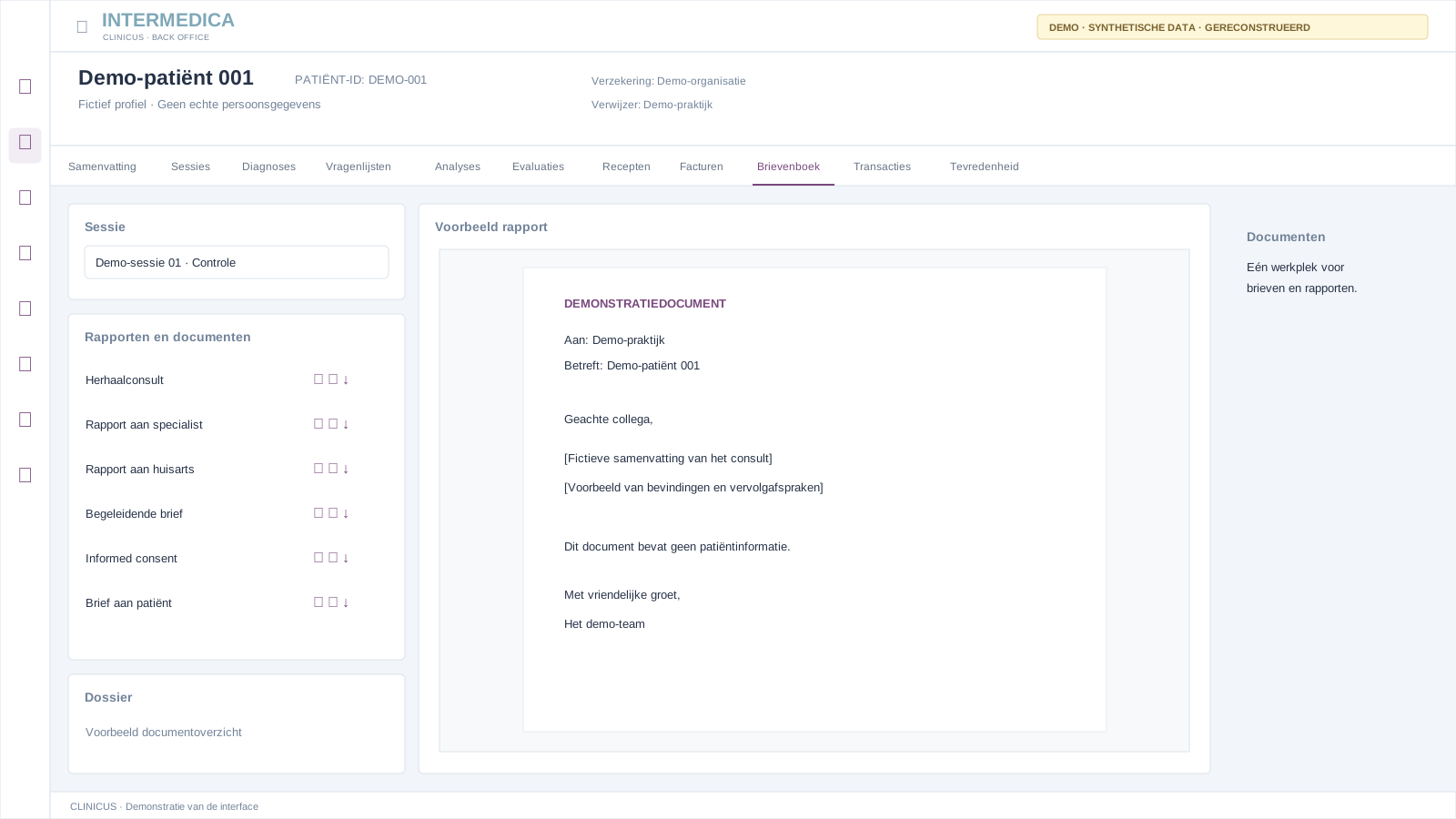
A workspace for reports, letters and consultation documents.
Intermedica needed to renew the digital foundation behind its patient journey: from the website and intake to booking, consultation management and ongoing clinical workflows.
FaRbrix rebuilt the electronic patient record, consultation booking and management, diagnosis and treatment workflows, intake questions, patient satisfaction surveys and the public website. AI was used during development to accelerate the work.
The rebuild, in practice
The collaboration began around 2022 and developed into a wider renewal of Intermedica’s patient platform and digital experience. The scope includes the back office, legacy-data migration, a patient portal and the public website.
FaRbrix migrated legacy data to a repository designed for improved security and efficiency, and created a patient portal. Together with online intake and booking, the portal brings patients into the digital journey and supports more efficient management of that journey.
The scope went beyond a public website. FaRbrix rebuilt Intermedica's electronic patient record (EPD), together with the workflows used to manage consultations, diagnoses and treatments. The project addressed the software supporting day-to-day clinic work as well as the patient-facing experience.
The rebuild covered consultation booking and management, intake questions and patient satisfaction surveys. These are distinct parts of the patient journey: collecting information before a visit, organizing appointments and gathering feedback afterwards.
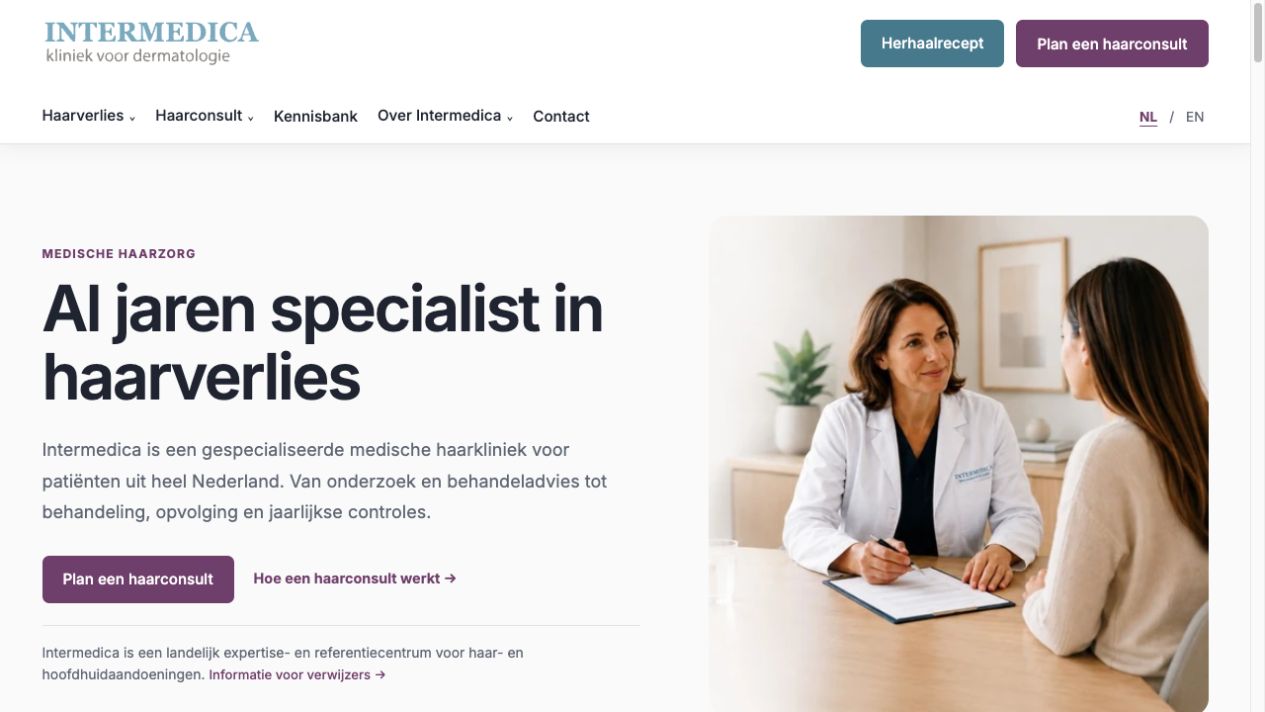
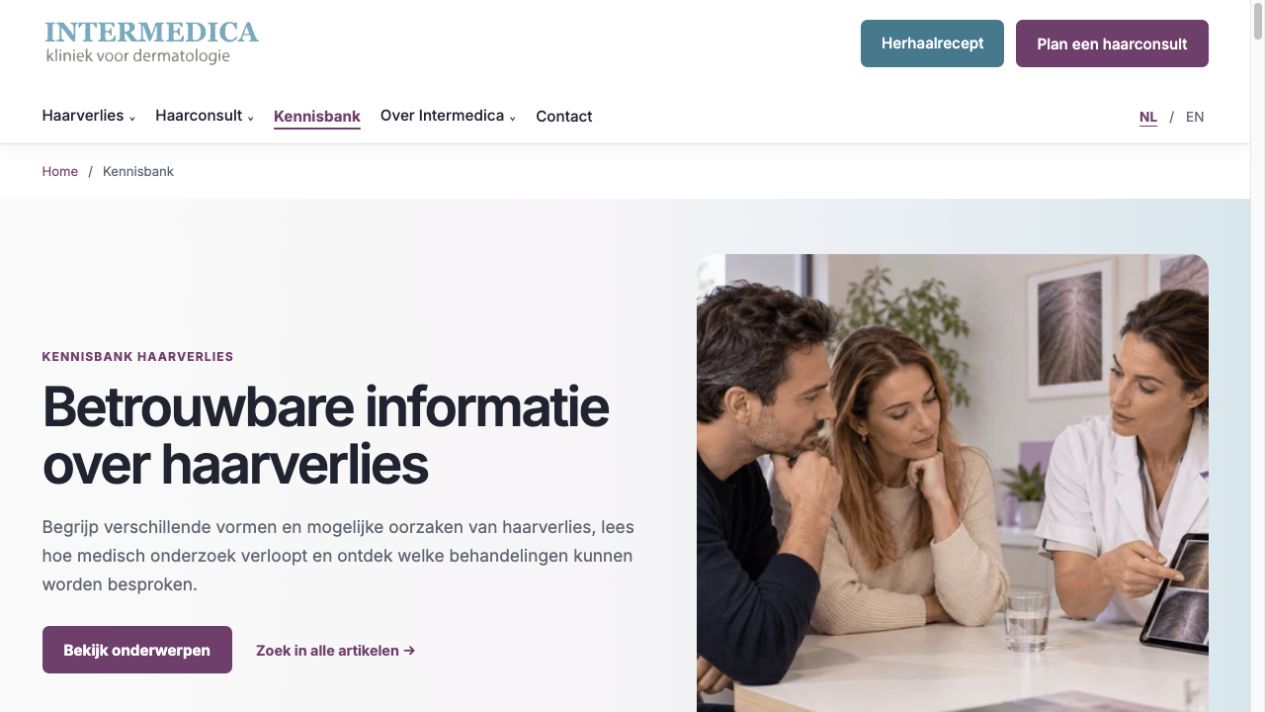
The website was rebuilt in Astro with Dutch and English pages, reusable templates and a custom content-management system. The delivery includes a knowledge centre, patient information, consultation journeys and routes for referring clinicians.
The work also covered patient segments and journeys. The website organizes information around different audiences and questions, helping visitors explore relevant topics and find the next step towards a consultation.
FaRbrix reports that using AI made implementation of the back office twice as fast. AI supported the development work within a broader programme covering the patient platform, data migration, portal and website.
The website project includes structured content, a review-and-approval workflow, explicit Dutch/English page relationships, canonical URLs and a sitemap. These provide a foundation for maintaining patient information and supporting search discovery as the site evolves.
FaRbrix reports improved efficiency in managing the patient journey through online patient participation, alongside twice as many patients per clinic session. Intermedica separately publishes patient-experience survey results. These describe service experience, rather than measuring the effect of the software or AI alone.
Project overview
The scope of the rebuild, from the first visit online to clinic workflows and patient feedback.
Website & knowledge centre
Booking & intake questions
Patient record & consult management
Diagnosis & treatment workflows
Patient satisfaction surveys
Simplified project-scope overview, rather than a screenshot of the clinical system.
Let's talk